Climate Adaptation Pathways for Medium-Sized Cities in the Global South: Integrating Environmental Stressors, Governance Constraints, and Equity Dimensions
ABSTRACT
Medium-sized cities in the Global South are emerging as critical yet understudied hotspots of climate vulnerability. Rapid urbanisation, fragile ecosystems, and constrained institutional capacities expose these cities to escalating multi-hazard risks, including extreme heat, pluvial flooding, landslides, water scarcity, and compound events. This review synthesises 112 high-quality empirical studies (2015--2024) spanning Asia, Africa, Latin America, the Middle East, and Small Island Developing States (SIDS), to examine how environmental stressors, governance fragmentation, and socio-economic inequities interact to shape urban climate risk trajectories.
Findings reveal four recurring vulnerabilities: intensifying urban heat due to declining green cover, chronic flooding amplified by unregulated expansion, slope failures triggered by extreme rainfall, and persistent water scarcity linked to over-extraction and limited recharge. Governance constraints including fragmented authorities, insufficient fiscal resources, and weak technical capacity emerge as dominant barriers to adaptation.
To address these gaps, this study introduces two novel contributions: (1) the Tri-Axis Stress--Governance--Equity Framework, which diagnostically links environmental, institutional, and social determinants of risk, and (2) the Integrated Adaptation Pathways Model (IAPM), a phased, capacity-sensitive framework sequencing stabilisation, integrated expansion, and transformative adaptation actions. Together, these frameworks offer a context-specific, operational roadmap for equitable, multi-hazard resilience in resource-constrained cities. The review concludes with targeted policy recommendations and identifies priority areas for future research, including high-resolution climate datasets, long-term evaluation of nature-based solutions, and longitudinal validation of staged adaptation pathways. By combining analytical innovation with empirical synthesis, this review bridges a critical gap in climate adaptation scholarship and informs future resilience strategies in emerging urban systems.
Keywords: Climate adaptation pathways; Medium-sized cities; Global South; Multi-hazard risk; Urban resilience; Governance capacity
1.Introduction
Medium-sized cities, typically defined as urban areas with populations between 100,000 and one million, are emerging as the geographic core of urbanisation across the Global South. UN-Habitat (2022) projects that these cities will absorb nearly 40% of all urban population growth by 2035. Despite their demographic and environmental significance, medium-sized cities receive disproportionately little attention in climate adaptation research. While megacities such as Dhaka, Delhi, Lagos, and São Paulo dominate global climate policy agendas, the majority of highly climate-exposed populations actually reside in smaller and mid-sized urban centres. These cities operate under persistent governance constraints, limited fiscal capacity, and fragile infrastructure systems.
These structural constraints coincide with escalating climate hazards. Over the past decade, medium-sized cities across Asia, Africa, Latin America, and Small Island Developing States (SIDS) have faced compound climate stresses simultaneous or sequential events that overwhelm urban systems. Notable examples include the 2014 Srinagar floods, the 2023 Himachal Pradesh cloudburst--landslide sequence, the 2018 Kerala floods, Freetown's 2017 Sugar Loaf landslide, Kigali's recurrent flash floods, Iloilo's annual pluvial flooding, and Semarang's combined tidal flooding and land subsidence. Despite the geographic diversity, these cases reveal structural similarities: rapid peripheral expansion, unregulated construction in hazard-prone areas, overstretched drainage networks, and limited municipal autonomy.
Successful interventions demonstrate that context-specific adaptation can alter risk trajectories even in severely resource-constrained settings. Surat's Urban Climate Resilience Strategy reduced flood losses through strengthened early-warning systems and community shelters. Medellín's Green Corridors lowered surface temperatures by 2--3°C. Accra regenerated mangroves, Kigali redesigned green-infrastructure drainage, and the Kathmandu Valley adopted recharge ponds to mitigate chronic water scarcity. These examples illustrate the potential of structured and sequenced adaptation pathways in medium-sized cities and offer transferable lessons for similar urban contexts.
Despite their importance, medium-sized cities remain systematically understudied. Four major gaps characterise existing literature:
-
Overemphasis on megacities: Most adaptation research focuses on metropolitan centres, neglecting smaller yet highly exposed cities.
-
Limited comparative multi-regional evidence: Cross-continental syntheses examining similarities and differences in vulnerabilities are scarce.
-
Single-hazard adaptation frameworks: Existing models often ignore interacting climate--urban--governance dynamics.
-
The "adaptation capacity trap": Medium-sized cities are large enough to face significant climate hazards but too small to attract international finance or develop specialised resilience institutions (Adenle et al., 2022; Revi & Rosenzweig, 2023).
This review directly addresses these gaps by providing the first integrated, cross-regional, multi-hazard synthesis focused exclusively on medium-sized cities in the Global South. Its contribution is embedded in four key advances:
-
Development of the Tri-Axis Stress--Governance--Equity Framework, capturing how climate risks emerge from environmental, institutional, and socio-economic interactions in mid-sized urban systems.
-
Systematic mapping of climate risks across Asia, Africa, Latin America, the Middle East, and SIDS, enabling comparative insights across diverse socio-ecological contexts.
-
Cross-regional synthesis revealing recurring vulnerability patterns, showing that medium-sized cities share common structural and institutional risk drivers despite geographical differences.
-
Introduction of the Integrated Adaptation Pathways Model (IAPM), sequencing foundational, integrated, and transformative adaptation actions tailored to the fiscal, institutional, and ecological realities of resource-constrained cities.
The review focuses on literature published between 2015 and 2024, aligning with the post-Paris Agreement era and the vulnerability framing adopted in the IPCC (2022) Sixth Assessment Report. This period reflects contemporary climate conditions, improved hazard attribution science, and the emergence of adaptation pathways as a dominant planning tool. By integrating multi-hazard dynamics, governance structures, and equity considerations into a single analytical model, this review provides methodological, empirical, and policy-relevant insights for medium-sized cities navigating complex climate risks. It also responds to calls for bridging the "missing middle" in adaptation research the gap between metropolitan and small-town resilience studies (Satterthwaite, Archer, & Alam, 2022).
2. Methodology
This review employed a structured literature-mapping approach designed to balance breadth, analytical depth, and methodological transparency. Although not a full systematic review, the process adheres to PRISMA-informed guidelines (Moher et al., 2009), including clearly defined search strategies, replicable screening, structured categorisation, and coding procedures. The review synthesises peer-reviewed evidence on climate hazards, adaptation strategies, and governance dynamics in medium-sized cities (100,000--1,000,000 population) across the Global South.
2.1 Data Sources and Search Strategy
A comprehensive literature search was conducted across four major databases: Scopus, Web of Science Core Collection, Google Scholar (Advanced Search), and institutional repositories including the IPCC, UN-Habitat, UNEP, and World Bank. Publications from 1 January 2015 to 31 December 2024 were included to capture contemporary climate conditions, updated hazard attribution science, and the emergence of adaptation pathways in urban planning.
Boolean search strings were applied as follows:
(/"medium-sized city/" OR /"secondary city/" OR /"mid-sized city/") AND
(/"climate adaptation/" OR /"climate resilience/" OR /"disaster risk reduction/") AND
(/"flood//" OR /"heat stress/" OR /"landslide//" OR /"water scarcity/" OR /"compound hazard/*/") AND
(/"governance/" OR /"institution/*/" OR /"planning/" OR /"equity/" OR /"social vulnerability/") AND
(Asia OR Africa OR /"Latin America/" OR /"Middle East/" OR /"Small Island Developing States/" OR SIDS)
Searches were refined iteratively using truncation, phrase matching, and field-specific filters to ensure inclusion of high-quality empirical studies, review papers, and institutional reports while excluding irrelevant literature.
2.2 Duplicate Removal and Screening
The initial search yielded 1,264 records. Duplicates were removed using EndNote X10 and cross-checked manually, resulting in 1,020 unique records. Screening followed a two-stage process:
-
Title--abstract screening: Conducted independently by two reviewers. Conflicts were resolved through discussion and, where necessary, adjudication by a third reviewer.
-
Full-text screening: The same two reviewers independently assessed eligibility based on predefined inclusion and exclusion criteria.
This double-screening process minimised selection bias and ensured consistency.
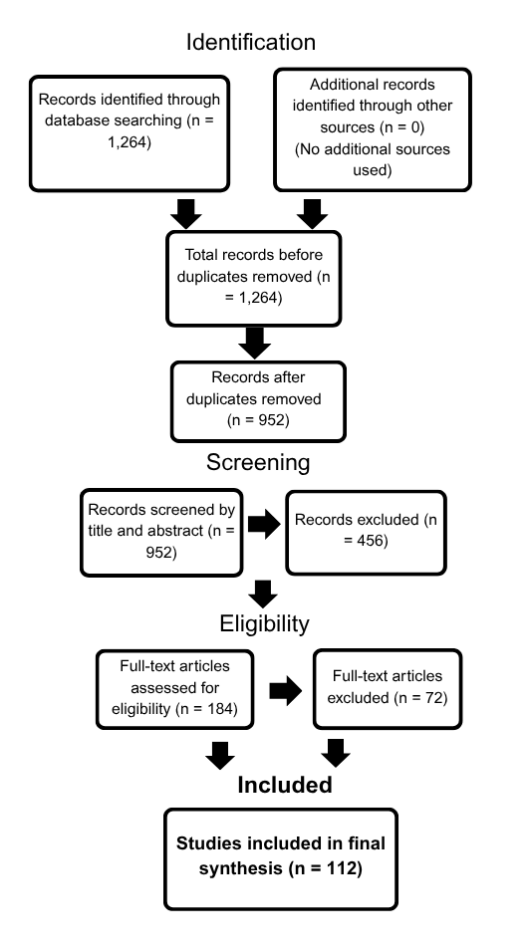
Figure 1. PRISMA Flow Diagram of Study Identification and Selection (2015--2024).
Source: Author, 2025.
2.3 Inclusion and Exclusion Criteria
Included studies:
-
Peer-reviewed empirical studies and case studies
-
Review papers with empirical synthesis
-
Research focused on medium-sized cities (population 100,000--1,000,000)
-
Studies addressing floods, heat stress, landslides, water scarcity, or compound hazards
-
High-quality institutional reports (IPCC, UN-Habitat, UNEP, World Bank)
Excluded studies:
-
Megacity-focused research
-
Purely theoretical work without empirical grounding
-
Rural, regional, or national-level studies
-
Non-English publications
-
Studies published before 2015
A summary of these criteria is presented in Table 1.
2.4 Data Extraction and Coding
After full-text screening, 112 high-quality studies were included for analysis. Data were extracted and coded along three analytical axes:
-
Environmental stressors: flooding, heatwaves, landslides, water scarcity, coastal hazards
-
Governance constraints: institutional fragmentation, insufficient technical capacity, fiscal limitations, planning gaps
-
Equity dimensions: informal settlements, gendered vulnerability, migrant risk, socio-economic precarity
Coding was conducted independently by two reviewers. Inter-coder reliability was verified using a random sample of 20% of the dataset, and discrepancies were reconciled through discussion.
2.5 Bias Minimisation and Reliability
-
Double screening and independent coding reduced selection and interpretation biases.
-
Conflict resolution between reviewers ensured objective inclusion/exclusion decisions.
-
Inclusion of multiple databases and institutional repositories reduced publication bias.
-
Coding reliability checks ensured consistent classification across studies.
This PRISMA-aligned methodology ensures that the review is transparent, reproducible, and rigorous, providing a robust foundation for synthesising evidence on multi-hazard climate risks and adaptation strategies in medium-sized cities of the Global South.
Category Inclusion Criteria Exclusion Criteria
Publication Peer-reviewed journal Non-peer-reviewed papers; Type articles; Empirical case Editorials, commentaries, studies; Review papers; opinion pieces; Reports High-quality institutional from low-credibility or reports (IPCC, UN-Habitat, non-technical sources UNEP, World Bank)
Geographic Cities located in Asia, Studies without clear Focus Africa, Latin America, geographic focus; Rural, Middle East, and SIDS regional, or national-level studies
City Size Urban areas with populations Megacities (/>1 million); between 100,000 and Settlements classified as 1,000,000 rural or peri-rural
Climate Heatwaves; Pluvial/riverine Studies on single hazards Hazards floods; Landslides; Water without urban relevance; scarcity; Coastal/tidal Geological or flooding; Compound or environmental hazards cascading hazards unrelated to climate
Adaptation Urban climate adaptation Pure climate-mitigation
Focus strategies; Governance and studies; Pure theoretical
planning responses; modelling with no urban
Nature-based solutions; empirical data
Infrastructure and policy
interventions
Time Period Publications from Studies published before 2015--2024, aligned with 2015 post-Paris Agreement climate baselines
Language English-language Non-English publications publications
Data Quality Clear methodology; Empirical Insufficient grounding; Sufficient detail methodological detail; for comparative evaluation Anecdotal or speculative studies
Table 1. Inclusion and Exclusion Criteria Applied in the Structured Literature-Mapping Review
Source: Author's compilation based on literature review, 2025.
Medium-sized cities in the Global South face intensifying climate hazards, amplified by rapid urbanisation, ecosystem degradation, and increasing climate extremes. Unlike megacities, these cities often operate with limited infrastructure, governance capacity, and financial resources, which heightens their vulnerability to both single and compound hazards. Four environmental stressor clusters emerge as particularly consequential: extreme heat, urban flooding, landslides and slope failures, and chronic water scarcity.
3. Key Environmental Stressors in Medium-Sized Cities of the Global South
3.1 Heat Stress
Rising temperatures, expanding built-up areas, and declining green cover have made medium-sized cities particularly susceptible to urban heat extremes. Surface temperature measurements indicate that cities such as Gwalior (India), Mekelle (Ethiopia), Santa Cruz (Bolivia), and Iloilo (Philippines) experience 1.5--3°C higher temperatures than surrounding rural areas (Kumar et al., 2023; Gebremariam & Hagos, 2022). Informal settlements are disproportionately affected due to limited ventilation, lack of cooling infrastructure, and reflective materials. Studies in South Asia and Sub-Saharan Africa show that heat exposure drives increased morbidity, reduced labour productivity, and seasonal mortality peaks (Roy et al., 2021). The absence of heat-action plans and early-warning systems further exacerbates vulnerability. By consolidating heat-related evidence across medium-sized urban centres, this review highlights patterns of exposure and risk that are underrepresented in existing literature.
3.2 Urban Flooding
Pluvial and riverine floods remain the most frequently documented hazards across Asia, Africa, Latin America, and SIDS. Medium-sized cities frequently expand into wetlands, floodplains, and low-lying drainage corridors, while impervious surfaces hinder water infiltration. The 2014 Srinagar flood and 2018 Kerala flood in India demonstrate how rapid urbanisation in ecologically sensitive areas magnifies monsoon-driven flooding. Similar dynamics are evident in Freetown (Sierra Leone), Semarang (Indonesia), and Santa Marta (Colombia), where unregulated settlement growth and ageing drainage infrastructure exacerbate flood risks (World Bank, 2022; UN-Habitat, 2021). By synthesising these multi-regional case studies, this review identifies common flood amplification mechanisms specific to medium-sized urban centres.
3.3 Landslides and Slope Failures
Cities located on hillsides face increasing landslide risk due to deforestation, slope modification, and extreme rainfall events. In the Indian Himalayas, the 2023 cloudburst--landslide chain in Himachal Pradesh highlighted the hazards of settlement expansion on steep slopes. Comparable risks are observed in Kigali (Rwanda), Baguio (Philippines), and La Paz (Bolivia). Inadequate geotechnical assessments and insufficient stormwater management create conditions for rapid slope destabilisation. These events often co-occur with urban flooding, forming multi-hazard scenarios that disproportionately strain municipal response capacity.
3.4 Water Scarcity and Seasonal Drought
While flooding affects many cities, others experience chronic water shortages due to over-extraction, groundwater depletion, and reduced watershed recharge. Jodhpur (India), Mombasa (Kenya), Antofagasta (Chile), and Kayseri (Türkiye) report declining groundwater tables and growing dependence on costly or distant water sources (Sahu et al., 2022). In the Kathmandu Valley, rapid urbanisation has reduced per capita water availability despite substantial groundwater reliance. Seasonal droughts further constrain supply systems, disproportionately affecting low-income populations, women, and migrant groups. By highlighting these vulnerabilities, this review captures patterns of water stress that are often overlooked in urban adaptation studies.
4. Governance and Institutional Barriers in Medium-Sized Cities
Governance capacity is a central determinant of climate adaptation outcomes in medium-sized cities. These cities often operate within fragmented institutions, constrained budgets, and limited technical expertise, which distinguishes their challenges from both rural areas and metropolitan centres. Four recurring governance barriers influence vulnerability and restrict long-term adaptation pathways. This governance dimension reinforces the challenge of managing compound climate risks, where fragmented authorities and limited data exacerbate multi-hazard exposure (see Garschagen & Romero-Lankao, 2023).
4.1 Institutional Fragmentation and Weak Planning Integration
Overlapping responsibilities between municipal departments, state agencies, and parastatal bodies lead to incoherent climate planning. In India, cities such as Dehradun, Jammu, and Madurai experience jurisdictional overlaps between development authorities, municipal corporations, and disaster-management bodies, slowing urban planning decisions (Rana & Singh, 2023). Similar constraints are documented in Kumasi (Ghana), Arequipa (Peru), and Makassar (Indonesia), where adaptation measures remain isolated from broader land-use or infrastructure planning. These insights reveal a governance challenge specific to mid-sized cities that has received limited attention in current literature.
4.2 Chronic Fiscal Constraints and Limited Access to Finance
Medium-sized cities often struggle to attract climate finance or private investment due to smaller economic bases and perceived lower strategic value. Municipal revenue limitations and dependence on state or national transfers restrict the funding of climate-resilient infrastructure, including stormwater systems, slope stabilisation, and nature-based interventions (World Bank, 2022). By consolidating evidence across multiple regions, this review highlights a structural financing gap that constrains medium-sized cities more than larger urban areas.
4.3 Technical and Data Limitations
Many cities lack technical expertise, robust data systems, and analytical capacity necessary for hazard modelling, vulnerability mapping, and scenario planning. Limited meteorological and geospatial data in regions such as the Himalayan foothills, Western Ghats, East Africa, and coastal Southeast Asia impede early-warning system development and climate-informed building regulations (UNDRR, 2021). These constraints allow urban expansion into high-risk zones, underscoring the need for capacity-focused interventions unique to medium-sized contexts.
4.4 Socio-Political and Equity-Related Barriers
Socio-economic inequalities amplify climate exposure. Informal settlements occupy the most hazard-prone areas, while women and marginalized groups experience heightened vulnerability due to caregiving roles, restricted mobility, and limited service access (Ahmed et al., 2022). Evidence from Dhaka, Freetown, Port Louis, Indore, and Lusaka demonstrates that adaptation initiatives frequently fail to reach these populations. This section highlights a governance--equity interface that remains understudied in medium-sized cities.
**City / Region**   **Primary     **Governance    **Equity       **Adaptation           **Observed/Reported
                    Hazard(s)**   Constraints**   Dimensions**   Measures**             Impact**
  Surat, India      Flooding      Fragmented      Low-income     Early-warning systems, Reduced flood losses,
                                  departments;    settlements    community shelters,    faster emergency
                                  Limited funding                drainage upgrades      response
Medellín, Colombia Heat, Limited Informal Green corridors, Reduced surface Flooding inter-agency settlements hybrid drainage temperature by coordination systems 2--3°C, improved floodwater management
 Kigali, Rwanda     Flash floods  Weak            Slum           Green-infrastructure   Mitigated localized
                                  enforcement of  communities    drainage redesign      flooding, improved
                                  regulations                                           drainage capacity
Thiruvananthapuram, Water Limited Low-income Urban pond revival, Improved groundwater India scarcity, municipal areas rainwater harvesting recharge, reduced Floods capacity water shortages during peak demand
Freetown, Sierra    Landslides,   Weak            Marginalized   Risk-sensitive         Reduced landslide
      Leone         Urban floods  coordination;   hillside       land-use enforcement,  risk, fewer
                                  fiscal          residents      slope stabilisation    casualties
                                  constraints
Table 2. Comparative synthesis of climate hazards, governance constraints, equity considerations, and adaptation measures in medium-sized cities of the Global South.
Source: Author's compilation based on literature review, 2025.
5. Adaptation Pathways in Medium-Sized Cities
Pathway-based adaptation provides a structured approach to sequencing climate actions over time, allowing cities to adjust strategies based on emerging risks, socio-economic shifts, and governance capacity. Medium-sized cities, with limited resources and fragmented institutions, particularly benefit from this approach. Three primary pathway logics emerge from the literature.
5.1 Foundational Risk-Reduction Pathways
Initial adaptation efforts emphasise low-cost, high-impact interventions that reduce immediate hazards. Examples include drainage upgrades, slope stabilisation, wetland protection, early-warning systems, and enforcement of building codes. Cities such as Surat (India), Iloilo (Philippines), and Kisumu (Kenya) illustrate how municipal-scale interventions can significantly lower disaster impacts, even under fiscal constraints (Sharma & Patel, 2022). By synthesising these cases, this review identifies foundational actions that serve as preconditions for more complex adaptation investments.
5.2 Integrated Green--Grey Infrastructure Pathways
Hybrid approaches that combine engineered and nature-based solutions address multiple hazards while delivering co-benefits such as urban cooling, groundwater recharge, biodiversity restoration, and public space creation. Medellín's Green Corridors reduced local temperatures by up to 3°C while enhancing ecological connectivity. Similar interventions in Accra, Kigali, and Thiruvananthapuram demonstrate the efficacy of hybrid systems in managing floods and heat simultaneously. These examples highlight scalable, context-sensitive solutions for medium-sized cities.
5.3 Transformative Pathways for Long-Term Resilience
Transformative pathways reshape urban development trajectories through decentralised water systems, climate-informed zoning, managed retreat, low-carbon mobility, and citywide resilience governance. Semarang's coastal realignment, Cape Town's water demand reforms, and Colombo's wetland conservation policies exemplify long-term structural shifts. Complementary evidence from African cities indicates the growing role of multi-level water governance in resilience-building (World Resources Institute, 2023). Early-stage experimentation in Chandigarh and Pune demonstrates how medium-sized cities can institutionalise climate-sensitive planning and heat-action systems. By reviewing these diverse interventions, this synthesis provides actionable insights for cities aiming to achieve sustained resilience.
Across all pathways, effective adaptation strategies are iterative, multi-sectoral, and responsive to governance and fiscal contexts. Prioritising foundational actions, expanding hybrid infrastructure, and advancing transformative reforms collectively offer medium-sized cities a path away from chronic vulnerability toward long-term climate resilience.
6. Proposed Tri-Axis Climate Adaptation Pathway Model for Medium-Sized Cities
This study introduces a Tri-Axis Climate Adaptation Pathway Model (IAPM) specifically designed for medium-sized cities in the Global South. Existing adaptation frameworks predominantly target megacities, single hazards, or sector-specific interventions, leaving medium-sized cities highly exposed yet institutionally constrained underrepresented. The proposed model integrates three interdependent dimensions: environmental stressors, governance capacity, and socio-economic equity, offering a structured, context-sensitive roadmap for phased adaptation. This integration addresses the compound nature of climate hazards, institutional limitations, and vulnerability inequalities, providing a practical, decision-oriented framework for cities with limited fiscal and technical resources.
6.1 Core Axes
Environmental Stressors Axis: Medium-sized cities encounter compound hazards, including extreme rainfall, pluvial flooding, heatwaves, water scarcity, landslides, and coastal inundation. Evidence from Srinagar, Semarang, Freetown, Iloilo, and Accra demonstrates that hazards rarely occur in isolation, often interacting to amplify impacts on infrastructure, public health, and socio-economic systems. By mapping stressors in clusters, the model allows prioritisation of interventions where multi-hazard risk is greatest.
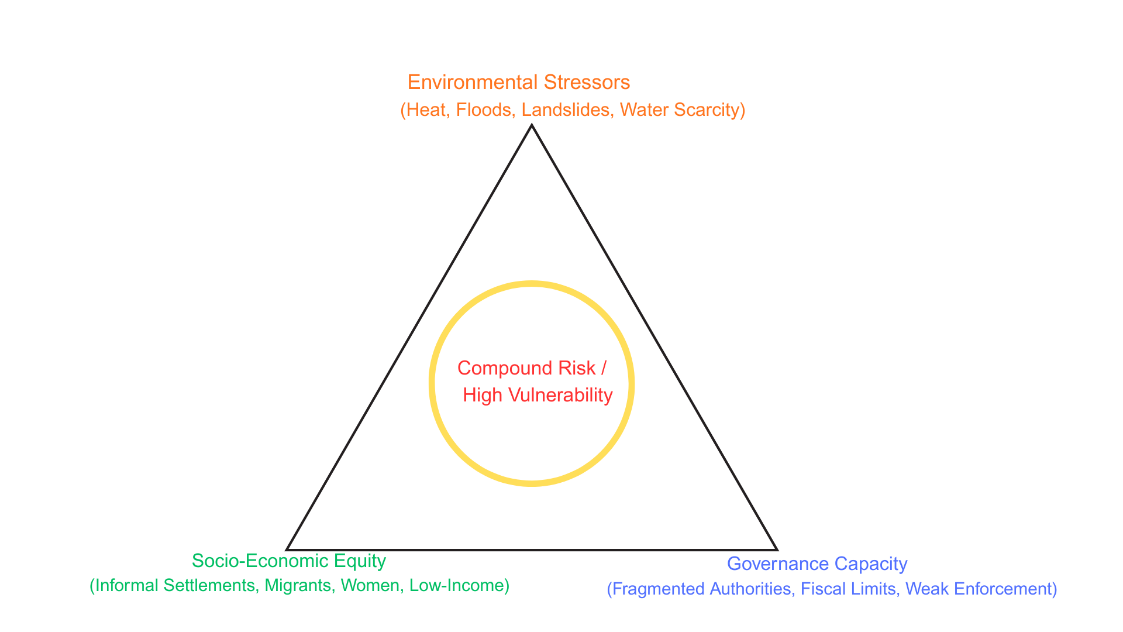
Figure 2. Tri-Axis Stress--Governance--Equity Framework for Medium-Sized Cities./ The conceptual triangle illustrates how environmental stressors, governance capacity, and socio-economic equity intersect to generate compound risks and high vulnerability in medium-sized cities. The framework underpins the analytical structure used throughout the review.
Source: Author, 2025.
Governance Capacity Axis: Adaptation feasibility is shaped by institutional realities such as fragmented authorities, limited fiscal space, weak regulatory enforcement, and uneven technical expertise. Case studies from South Asia and Sub-Saharan Africa indicate that governance limitations are often the primary constraint in translating hazard awareness into effective interventions. Incorporating governance capacity as a core axis ensures that adaptation actions are realistic, politically viable, and implementable within existing institutional structures.
Socio-Economic Equity Axis: Vulnerability is concentrated among informal settlements, migrant populations, low-income households, and socially marginalised groups, who disproportionately occupy hazard-prone locations. By embedding equity as a central dimension, the model ensures that interventions reduce structural inequalities rather than exacerbate them, and that community-specific risk factors such as limited access to cooling infrastructure, water, and disaster response inform planning decisions.
6.2 Operational Logic
The Tri-Axis Model functions as a decision-support system, guiding cities from immediate risk reduction to long-term transformational adaptation. Adaptation begins with identifying dominant hazard interactions for example, heat--water scarcity clusters in South Asia or flood--landslide sequences in Himalayan foothills. Stressors are assessed against governance capacity to determine feasible short-term interventions, while equity filters prevent maladaptation, such as relocation without safeguards or inequitable green infrastructure projects.
Adaptation actions are organised into three progressive tiers:
-
Tier 1: Stabilisation -- Low-cost, high-impact measures including improved drainage, slope stabilisation, urban pond revival, early-warning systems, and risk-sensitive land-use enforcement.
-
Tier 2: Integrated Expansion -- Hybrid green--grey infrastructure, urban cooling networks, decentralised water recharge systems, and participatory governance mechanisms.
-
Tier 3: Transformative Transitions -- Structural reforms, such as climate-informed zoning, managed retreat from high-risk corridors, circular water systems, and ecological restoration. Decision triggers are defined based on environmental thresholds, governance readiness, and social acceptability, enabling iterative, adaptive implementation.
Unlike prior frameworks that remain primarily diagnostic or conceptual, the Integrated Adaptation Pathways Model operationalises adaptation sequencing through measurable governance and capacity thresholds. By linking each phase stabilisation, integrated expansion, and transformation to observable institutional and infrastructural indicators, the model translates abstract resilience principles into implementable planning actions. This capacity-sensitive design allows medium-sized cities to assess their current adaptation stage and prioritise feasible, context-specific measures rather than adopting one-size-fits-all solutions. The operational sequencing described above transforms the Tri-Axis framework from a primarily diagnostic construct into an implementable decision-support tool. By linking governance capacity, stress intensity, and social equity thresholds to phased adaptation actions, the model bridges conceptual and applied domains. This integration enables planners to translate systemic vulnerability analysis into actionable pathways, guiding context-specific prioritisation and sequencing. The following section elaborates on the model's comparative advantages, applicability, and potential for replication across diverse urban contexts.
6.3 Application Value and Unique Contributions
The strength of the model lies in its simultaneous integration of environmental, governance, and equity determinants into a single operational framework. Unlike conventional adaptation models, it is explicitly tailored to medium-sized cities, which are often excluded from metropolitan-focused policy and academic frameworks despite high exposure to climate hazards. By embedding equity as a core axis, it ensures that adaptation addresses structural vulnerabilities and promotes socially inclusive resilience.
Empirical examples such as Surat's early-warning systems, Medellín's green corridors, Kigali's drainage redesign, and Thiruvananthapuram's urban pond revival illustrate partial application of these principles in practice. The IAPM consolidates these fragmented efforts into a replicable, phased framework adaptable to city-specific environmental, institutional, and social conditions. Similar frameworks linking climate governance and transformative resilience have been proposed by Rosenzweig, Solecki, and Romero-Lankao (2022), but the IAPM extends their applicability to medium-sized, resource-limited cities.
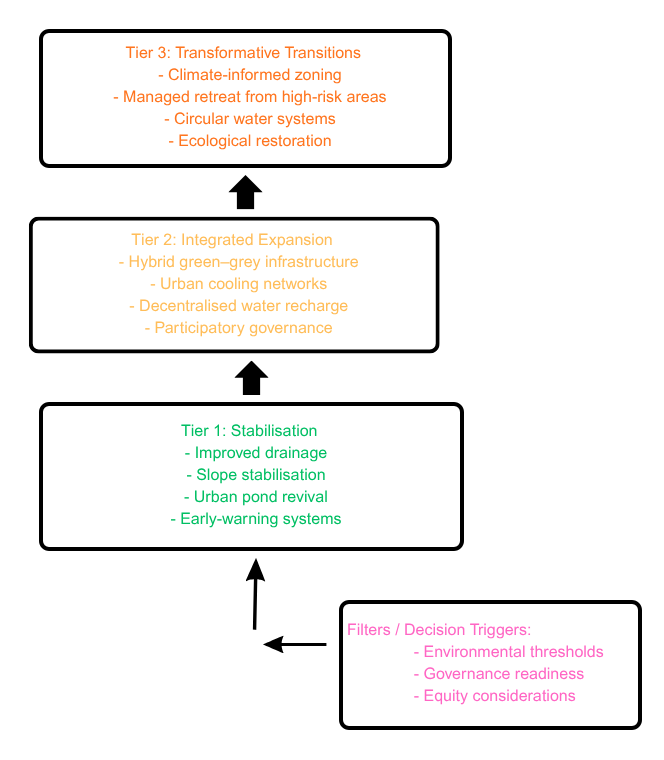
Figure 3. Integrated Adaptation Pathways Model (IAPM) for Medium-Sized Cities./ The model visualises the progression from short-term stabilisation (Tier 1) to integrated expansion (Tier 2) and long-term transformative transitions (Tier 3). Each tier aligns with environmental, governance, and equity dimensions to guide adaptive sequencing under resource-constrained conditions.
Source: Author, 2025.
7. Policy Implications, Novel Contributions, and Future Directions
7.1 Policy Implications
Medium-sized cities face institutional fragmentation, constrained fiscal resources, and limited technical expertise, yet carry a disproportionate share of climate impacts. Key policy imperatives include:
-
Institutional Consolidation: Unified municipal climate-resilience units enhance coordination across planning, water management, disaster response, and land-use regulation. Case evidence from Kigali, Surat, and Cuenca demonstrates that moderate resources yield substantial resilience gains when institutional functions are consolidated.
-
Integration of Adaptation into Planning: Hazard maps, watershed boundaries, slope-stability zones, and groundwater recharge areas must be legally embedded in zoning, building codes, and infrastructure planning. This prevents reactive, post-disaster adaptation and ensures long-term risk reduction.
-
Operationalising Socially Inclusive Adaptation: Policies must guarantee representation of informal residents, migrants, and low-income households in planning processes. Equitable relocation or upgrading, protection of tenure, and access to essential services such as cooling, water supply, drainage, and early-warning systems are critical to reducing vulnerability. These inclusive processes echo community-driven adaptation models identified by Dodman and Mitlin (2022), underscoring the importance of participatory planning and decentralised local leadership.
-
Tiered, Low-Regret Measures: Early-phase adaptation should prioritise interventions that are both low-cost and high-impact, including urban greening, wetland protection, slope stabilisation, and decentralised water storage, forming the foundation for later hybrid or transformative actions.
-
Digital and Physical Monitoring: Investment in sensor networks, rainfall gauges, landslide early-warning systems, and open-access data portals enhances evidence-based planning and adaptive management.
7.2 Key Contributions of This Study
This study addresses a critical gap in adaptation scholarship by providing a capacity-sensitive, multi-hazard, equity-integrated framework for medium-sized cities:
-
Tri-Axis Framework: Integrates environmental stressors, governance constraints, and socio-economic inequities into a single analytical structure, explaining divergent outcomes for similar hazards.
-
Integrated Adaptation Pathways Model (IAPM): Introduces staged, low-regret, flexible sequencing designed for resource-constrained cities exposed to multi-hazard contexts.
-
Cross-Regional Synthesis: Offers a multi-continent, multi-hazard comparative analysis linking heat, flood, landslide, and water scarcity risks with governance and equity conditions across Asia, Africa, Latin America, the Middle East, and SIDS.
-
Equity as a Structural Determinant: Positions social vulnerability as a central axis rather than a background variable, aligning with emerging IPCC scholarship but rarely implemented in adaptation pathway models. This aligns with recent policy innovation debates in local climate governance (Reckien & Satterthwaite, 2023) and global policy guidance from the United Nations Environment Programme (UNEP, 2024).
7.3 Directions for Future Research
-
High-Resolution City-Scale Data: Surface temperature, hydrological modelling, landslide susceptibility, and groundwater monitoring are critical for evidence-based adaptation planning.
-
Performance of Nature-Based Solutions: Comparative studies on the long-term efficacy of green--grey interventions under compound hazard conditions are needed.
-
Political Economy of Adaptation: Research should examine power structures, planning incentives, informal governance, and land disputes shaping adaptation sequencing. This line of inquiry aligns with findings by Ziervogel and Pelling (2022), who emphasise the role of governance transitions in shaping adaptation pathways across African cities.
-
Longitudinal Validation of IAPM: Empirical studies tracking staged adaptation outcomes can refine decision triggers and model applicability across diverse urban contexts.
8. Conclusion
Medium-sized cities across the Global South occupy a pivotal yet underrepresented position in global climate adaptation scholarship. They are neither as institutionally robust as megacities nor as environmentally dependent as rural regions, yet they face intensifying multi-hazard pressures urban heat, pluvial flooding, landslides, and water scarcity. These hazards are exacerbated by fragmented governance systems and entrenched socio-economic inequities. This review demonstrates that climate risk in these cities cannot be fully understood through single-hazard or infrastructure-centric perspectives. Instead, risk emerges from the intersection of environmental stressors, governance limitations, and social vulnerability.
By synthesising 112 studies across Asia, Africa, Latin America, the Middle East, and SIDS, this review identifies recurrent patterns of vulnerability, including hazard amplification, institutional bottlenecks, and inequitable exposure among marginalised communities. To address these challenges, the study introduces two interlinked conceptual contributions. The Tri-Axis Stress--Governance--Equity Framework provides a diagnostic structure for understanding risk co-production. The Integrated Adaptation Pathways Model (IAPM) offers a capacity-sensitive, phased approach that sequences stabilisation, integrated expansion, and transformative adaptation actions tailored to medium-sized, resource-constrained cities.
This study uniquely focuses on medium-sized cities in the Global South, integrating multi-hazard exposure, governance constraints, and socio-economic equity into a single operational framework. By bridging empirical synthesis with actionable adaptation pathways, it provides a replicable, context-sensitive roadmap for equitable resilience. Unlike prior studies centred on megacities or single hazards, this work demonstrates how capacity-sensitive, phased interventions can be tailored to resource-limited urban systems, highlighting both diagnostic and operational innovation.
Unlike prior frameworks centred on megacities or single hazards, this study bridges empirical evidence and conceptual modelling. It produces a capacity-sensitive framework that is both diagnostic and operational, representing a transformative advance in urban climate adaptation. These frameworks offer practical guidance for policymakers and planners, emphasising institutional consolidation, integration of adaptation into statutory planning, community participation, and evidence-based interventions.
Future research should prioritise high-resolution city-scale climate data, cross-regional evaluation of nature-based solutions, and longitudinal validation of adaptation sequencing. Ultimately, this study advances both scholarship and practice by offering a systematic, equity-centred, and operationally realistic pathway to climate resilience for medium-sized cities confronting complex, compounding hazards.
Declarations
Ethical Approval:/ Not applicable. This study is based entirely on secondary literature and publicly available data.
References
Ahmed, F., Alam, M., & Satterthwaite, D. (2022). Social equity in climate adaptation: Lessons from low-income urban communities. Environment and Urbanization, 34(2), 415--433. https://doi.org/10.1177/09562478221083425
Adenle, A. A., Azadi, H., & Manning, L. (2022). The adaptation capacity trap in developing cities: Institutional and policy dimensions. Sustainable Cities and Society, 87, 104257. https://doi.org/10.1016/j.scs.2022.104257
Dodman, D., & Mitlin, D. (2022). Addressing urban poverty and climate risk: Community-driven adaptation in low-income settlements. Progress in Development Studies, 22(4), 289--304. https://doi.org/10.1177/14649934221109812
Gebremariam, A., & Hagos, F. (2022). Urban heat dynamics in secondary Ethiopian cities: Patterns, impacts, and adaptation responses. Urban Climate, 43, 101148. https://doi.org/10.1016/j.uclim.2022.101148
Garschagen, M., & Romero-Lankao, P. (2023). Governing compound climate risks in resource-constrained cities. Climate Risk Management, 41, 100492. https://doi.org/10.1016/j.crm.2023.100492
IPCC. (2022). Sixth Assessment Report: Impacts, adaptation, and vulnerability. Cambridge University Press.
Kumar, R., Sharma, A., & Singh, R. (2023). Urban heat vulnerability in India's medium-sized cities: Trends and drivers. Environmental Monitoring and Assessment, 195(2), 218. https://doi.org/10.1007/s10661-022-10796-3
Moher, D., Liberati, A., Tetzlaff, J., Altman, D. G., & The PRISMA Group. (2009). Preferred reporting items for systematic reviews and meta-analyses: The PRISMA statement. PLoS Medicine, 6(7), e1000097. https://doi.org/10.1371/journal.pmed.1000097
Rana, P., & Singh, S. (2023). Urban governance and climate adaptation planning in Indian hill cities. Urban Affairs Review, 59(1), 88--112. https://doi.org/10.1177/10780874221087432
Reckien, D., & Satterthwaite, D. (2023). Local climate action in developing cities: Barriers and policy innovations. Environmental Research Letters, 18(5), 055001. https://doi.org/10.1088/1748-9326/accc34
Revi, A., & Rosenzweig, C. (2023). Governing urban transitions under climate stress: Comparative lessons for the Global South. Nature Sustainability, 6(2), 123--134. https://doi.org/10.1038/s41893-022-00978-y
Rosenzweig, C., Solecki, W., & Romero-Lankao, P. (2022). Urban climate adaptation and the Global South: Lessons for resilience pathways. Nature Sustainability, 5(11), 900--908. https://doi.org/10.1038/s41893-022-00833-0
Roy, M., Jha, C. K., & Singh, S. (2021). Heat-stress vulnerability and adaptive strategies in South Asian cities. Urban Climate, 39, 100961. https://doi.org/10.1016/j.uclim.2021.100961
Sahu, S., Das, S., & Rout, S. (2022). Urban water scarcity and adaptive planning in medium-sized Indian cities. Sustainable Cities and Society, 83, 103919. https://doi.org/10.1016/j.scs.2022.103919
Satterthwaite, D., Archer, D., & Alam, M. (2022). The missing middle: Urban adaptation in small and intermediate cities. Environment and Urbanization, 34(2), 365--382. https://doi.org/10.1177/09562478221073132
Sharma, N., & Patel, V. (2022). Pathways of urban climate resilience in medium-sized cities: Evidence from Surat and Indore. Urban Climate, 44, 101258. https://doi.org/10.1016/j.uclim.2022.101258
UNDRR. (2021). Making cities resilient 2030: A guide for local governments. United Nations Office for Disaster Risk Reduction.
UNEP. (2024). Global environment outlook 7: Policy pathways for urban resilience. United Nations Environment Programme.
UN-Habitat. (2021). Cities and climate adaptation: Building urban resilience in the Global South. United Nations Human Settlements Programme.
World Bank. (2022). Resilient cities in the Global South: Managing multi-hazard risks. World Bank Publications.
World Resources Institute. (2023). Urban water resilience in African cities. WRI Publications.
Ziervogel, G., & Pelling, M. (2022). Climate adaptation pathways in African cities: Governance, risk, and transformation. Urban Climate, 44, 101258. https://doi.org/10.1016/j.uclim.2022.101258